Audi & VW Parts: Interchangeability Guide
Audi parts, Volkswagen parts, Audi and Volkswagen interchangeable parts, Pretoria spares
Audi and Volkswagen Parts: When Are They Interchangeable?
Many Audi and Volkswagen owners ask us the same thing: “Can I use a Volkswagen part on my Audi – or the other way around?” Sometimes the answer is yes. But “they’re in the same group” or “it looks the same” are not the right tests. At Morris Garage in Eastlyne, Pretoria, we work on a simpler rule: interchangeability is determined by the part number, not by brand, platform or appearance. When part numbers match, the parts are the same. When they differ, you must verify before fitting.
What Platform Sharing Actually Means
Audi and Volkswagen sit in the same automotive group, so some of their vehicles share an underlying “platform”. In simple terms, a platform is the basic structure under the body – things like the floor pan, parts of the chassis and some drivetrain layouts. You’ll often hear names like MQB or MLB used to describe these shared platforms across different models and brands in the group.
Platform sharing is normal in the motor industry. It helps manufacturers spread development costs and build different vehicles from the same basic architecture. That’s why some Audi and Volkswagen interchangeable parts do exist – the shared platform can mean certain components are designed from the same base idea and sometimes even share a catalogue entry. But that’s only part of the story, and it is not proof that any two parts will swap straight over.
Even on the same platform, engine specifications, tuning, suspension settings, trim levels and equipment packages can all differ. A sportier Audi may use different brakes to a comfort-focused VW, even if they share a lot underneath. A higher-output engine can need different injectors or cooling parts to a lower-output version from the same family. Those differences create different part requirements and, very often, different part numbers. The platform is the starting point for your enquiry, not a confirmation that the parts will fit your car.
Why Appearance Is Not a Reliable Test
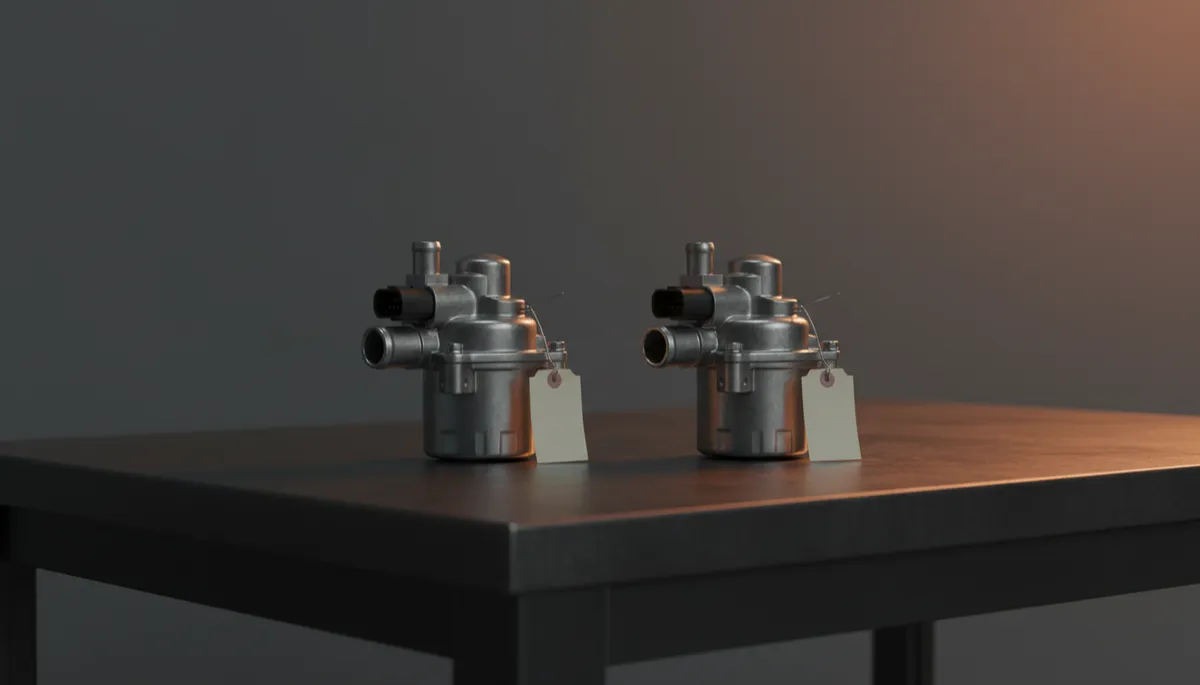
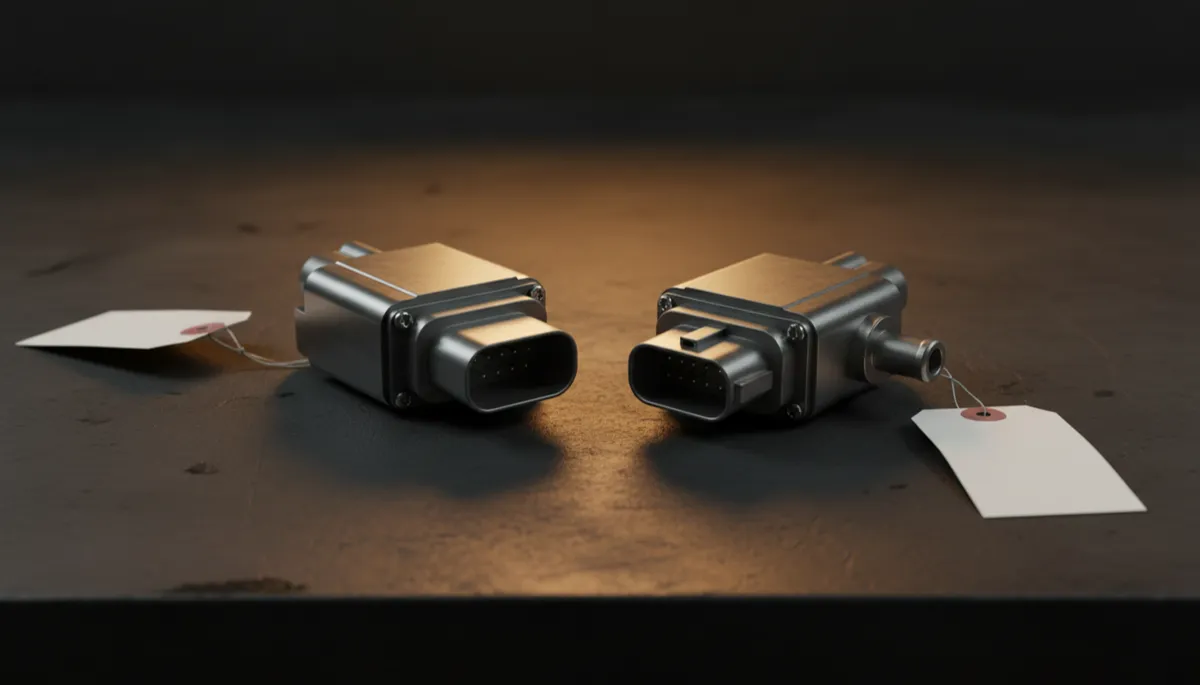
It is tempting to put two parts next to each other on the bench and decide with your eyes. Same size, same shape, same connector – must be the same part, right? Not always. Two components from different applications can look almost identical and still have different internal specifications, materials, calibration or tolerances. That difference may only show up once the car is on the road – or when something fails early.
The opposite can also happen. A part that looks slightly different on the outside might share exactly the same part number in the catalogue and be functionally identical. Manufacturers sometimes update the moulding or finish without changing the actual specification, so the part number stays the same while the look changes a bit. That’s one more reason why your eyes are not the final judge of fitment or function.
- Sensors and control units can share housings and plugs, but be calibrated differently for each application.
- Brake pads and discs may match in diameter and thickness, yet use different friction materials or cooling designs.
- Filters (air, oil, fuel, cabin) can share dimensions but have different filtration ratings or construction for each engine or model.
So for Audi and Volkswagen interchangeable parts, do not rely on appearance. Rely on the part number and the catalogue application. Your eyes can help you double-check, but they should never be your only test.
The Part Number Test — The Only Reliable Method
The most important rule we use at Morris Garage is simple: the definitive check for interchangeability is the part number. The manufacturer’s catalogue tells you exactly which vehicles a part is designed for. If two applications share the same part number, they share the same part. If they don’t, you must treat them as different until properly verified.
- If a component fitted to your Audi and the corresponding component fitted to a VW carry exactly the same part number in the manufacturer’s catalogue, they are the same part and can be treated as interchangeable.
- If the part numbers differ – even by a single digit or suffix – they are catalogued as different parts and must be treated as different until a trusted cross-reference confirms they are equivalent.
How to Check Part Numbers Properly
- Find the part number on the existing component. It is usually stamped, engraved or printed on a label. Clean the area if needed and take a clear photo so you don’t mix up digits or letters.
- Look up your vehicle in a parts catalogue. Use a catalogue that searches by vehicle specification or VIN. For filters, the MANN-FILTER online catalogue (mann-filter.com/en/catalog.html) accepts VIN and part number as direct search inputs and returns results by vehicle application, which is very helpful when you are checking cross-application listings.
- Compare the part number against the other application. Same number across both vehicles: confirmed interchangeable for that catalogue version. Different number: you need further verification before you assume they are the same.
Even when part numbers match, it is still wise to confirm with your supplier that the part they are supplying is correct for your VIN or engine code. Catalogues do get updates and running changes. A solid cross-reference is a strong indicator, but a quick double-check can save you a comeback or a refit later.
Genuine Parts — What Changes When You Cross Brands
When you buy Genuine parts, you are not just buying a component – you are also buying the brand and the channel behind it. Audi Genuine Parts and Volkswagen Genuine Parts are separate product lines, even when the underlying component may be physically identical and share a part number in the group catalogue.
Audi South Africa explains that its Genuine Parts “are created during the development of your Audi” and that all Audi Genuine Parts come with a two-year warranty when purchased through the authorised Audi dealer channel (source: audi.co.za/en/audi-service/audi-genuine-parts/). That warranty applies to Audi Genuine Parts bought through that channel, not to the same component bought as a different brand, or through a different route, even if the physical part is similar in design.
OEM and aftermarket parts are a bit different. If a recognised manufacturer builds a filter, gasket or sensor to the same specification, and catalogues it for both Audi and Volkswagen applications, then it can be interchangeable regardless of which badge is on the vehicle. But again, the key is what the catalogue says, not what someone guesses at the counter. The part number and application listing must do the talking.
When to Ask — And What to Send
If you are not sure about Audi and Volkswagen interchangeable parts, that is the right time to ask for help. The more detail you give us, the better we can help you avoid a wrong part and a wasted Saturday in the workshop. Here is what to send when you enquire about cross-brand compatibility:
- Your vehicle’s make, model, year and engine code.
- The make, model, year and engine code of the other vehicle you are comparing to (if there is one).
- The part number on your existing component, plus a clear photo of the label or stamping.
- A short note on what you are trying to achieve: find an alternative, confirm fitment from a different application, or source a more available or affordable equivalent.
Be clear in your message. For example: “I have an Audi with this engine code and want to know if the [part description] from this VW with that engine code is the same part.” That gives a supplier like us enough information to check catalogues properly instead of taking a guess over the phone.
Safety-Critical Parts — Extra Caution Required
Brakes, steering, suspension and other safety-critical components are not the place to experiment. The consequences of fitting the wrong specification part can be serious – not just for the car, but for the people inside it and around it. For these items, you should always verify that the part number matches your vehicle’s exact model, year and engine variant. If there is any doubt, speak to a qualified workshop before fitting. Never assume a used safety-critical part is suitable just because it appears to fit or comes from a similar Audi or VW.
FAQs — Audi and Volkswagen Cross-Brand Questions
Q1: If a parts supplier says an Audi part “crosses over” to VW, is that confirmed interchangeable?
A crossover or cross-reference is a useful starting point, but it is not the same as a confirmed part number match. Ask the supplier to confirm that the part numbers are identical in the current catalogue for both applications. Catalogues change over time, and a listing that was correct two years ago may not reflect a later running change or supersession.
Q2: Can I use a VW engine part on the same engine fitted to an Audi?
Sometimes the same basic engine is fitted across Audi and Volkswagen models, but you still need to be careful. If the engine is truly the same specification – same engine code, same output, same application – and the part numbers match, then you are dealing with the same component, regardless of which badge is on the bonnet. Always verify that the engine code matches exactly, because one engine family can have several variants with different internals or ancillaries depending on market and model.
Q3: Why do some Audi parts cost more than the equivalent VW part for the same engine?
Genuine Audi and VW parts move through different dealer networks with their own pricing structures and brand positioning. If a genuine Audi-badged part and a VW-badged part carry the same part number, you are not comparing two different components – you are comparing pricing and branding across two channels. OEM and aftermarket equivalents are usually priced independently of the vehicle brand, based more on the part itself and the supplier’s positioning.
Q4: I found a used Audi part that I want to fit to my VW — what do I check first?
Start by confirming that the part number on the used Audi part matches exactly the part number specified for your VW’s model, year and engine variant. If that checks out, inspect the condition and ask about the removal history, just as you would with any used component. For safety-critical systems like brakes or steering, do not rely only on appearance or assumptions – confirm part number, application and condition before you even think of fitting it.
Not Sure If It’s the Same Part? Ask Us
Need help finding the right part? Send Morris Garage your vehicle make, model, year and the part you need. Add the engine details, part number or a photo if available, and request a compatibility, availability and price check.
Chat with us on WhatsApp for quick support while you’re at the car or in the workshop.
Morris Garage / Spares Boys Pretoria · 199 Stormvoel Road, Eastlyne, Pretoria, Gauteng
An enquiry does not reserve stock or confirm compatibility.
Sources and Further Reading
- Audi South Africa — Audi Genuine Parts (two-year warranty, created during vehicle development): www.audi.co.za/en/audi-service/audi-genuine-parts/
- Volkswagen South Africa — Genuine Parts information (brochure via VW SA website): www.vw.co.za
- MANN-FILTER Online Catalogue — accepts VIN and part number as search inputs for cross-application filter checks: www.mann-filter.com/en/catalog.html
- For part number verification and cross-brand compatibility checks specific to your vehicles, contact Morris Garage directly.