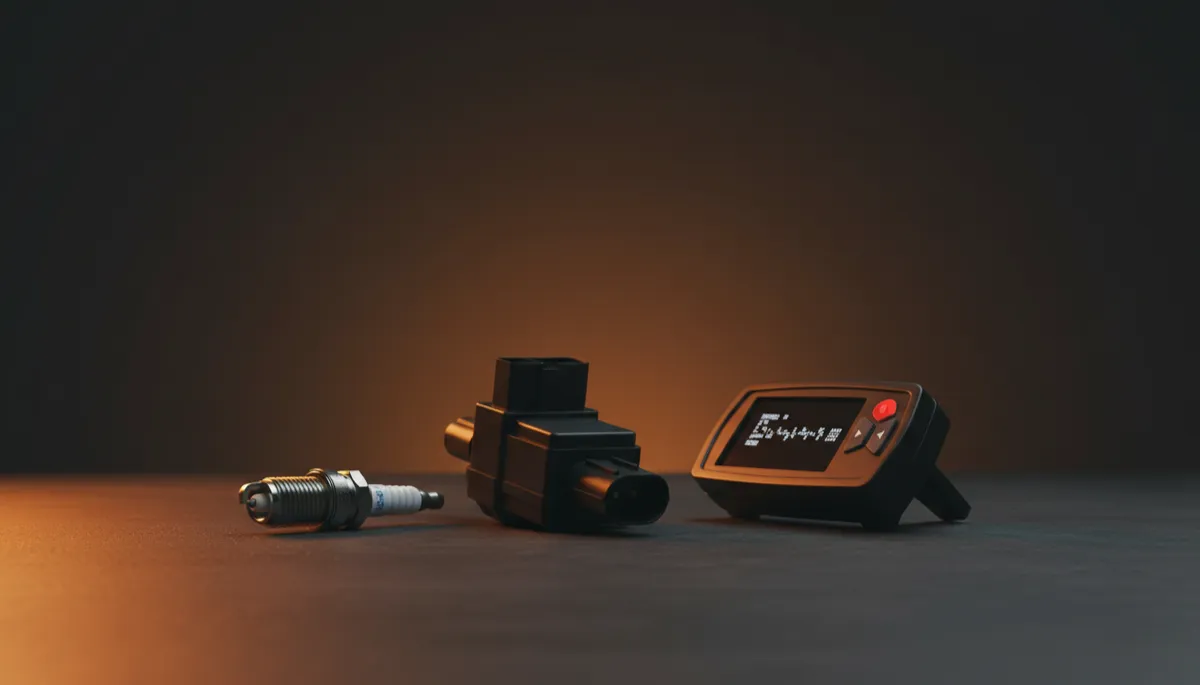
Car Misfiring? Check Before Buying Parts
Automotive Parts, Engine Misfire, Car Misfiring
Car Misfiring? Why You Should Check Before Buying Spark Plugs or Coils
You are driving through Pretoria, and suddenly your car starts shaking. The engine warning light comes on, and someone tells you the engine is misfiring. Your first thought is to buy spark plugs or an ignition coil and hope for the best. That may be the problem — but a car misfiring can have several causes. Buying the wrong part does not fix the fault and wastes money. Before you buy anything, you need to know which cause you are actually dealing with.
What Is a Misfire?
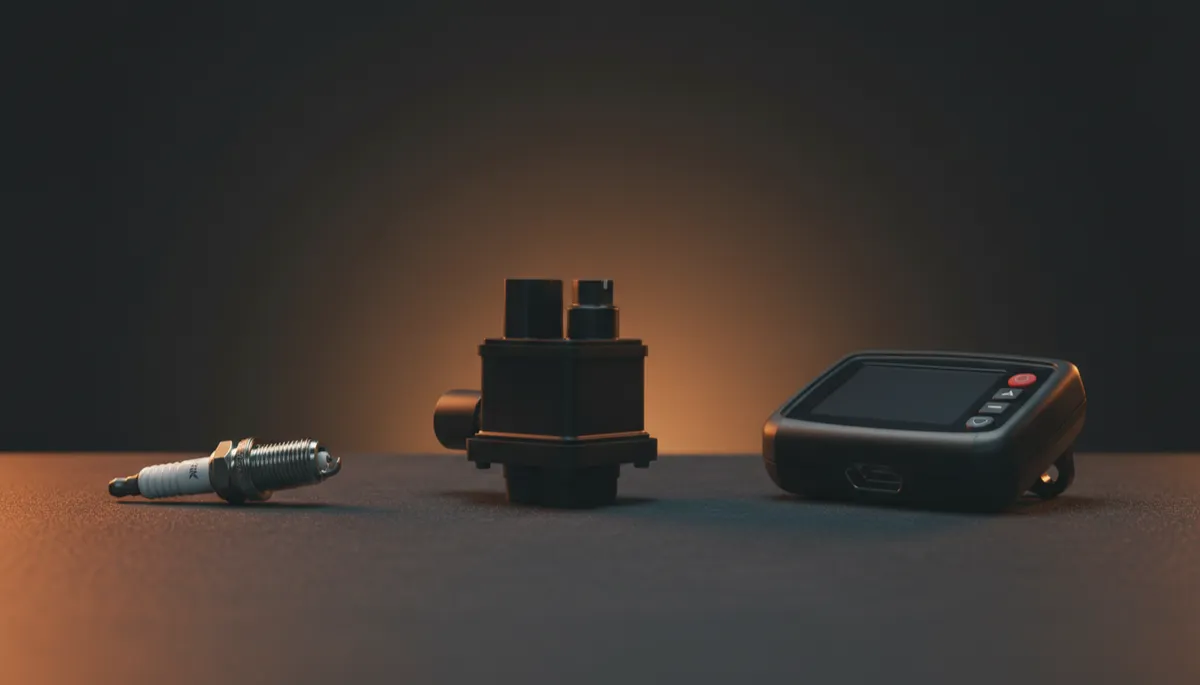
In simple terms, an engine misfire happens when one or more cylinders do not complete a proper combustion cycle. The air–fuel mixture in that cylinder does not ignite correctly, or does not ignite at all, on that firing event. The result is usually a rough-running engine, shaking or vibration, less power, and often an engine warning light on the dash. A scan tool plugged into the vehicle’s OBD port can read fault codes that show which cylinder or cylinders are affected — but a cylinder-specific misfire code only shows where the misfire is happening, not why it is happening.
Possible Causes of an Engine Misfire
A car misfiring can come from several different systems in the engine. Below are some common possibilities — but only a proper diagnostic check with a scan tool and physical inspection can tell which one applies to your vehicle.
Spark Plugs
Worn, fouled or damaged spark plugs are one of the most common misfire causes in petrol engines. One cause may be a plug that has simply reached the end of its service life. Another possible cause is a plug contaminated with oil, fuel, or carbon, which can prevent a clean spark. A plug that is physically cracked or damaged can also misfire. Spark plugs are vehicle-specific in type, reach and electrode design — fitting a plug that does not match the engine’s requirements can cause misfiring even if the plug looks new and “okay” to the eye.
Ignition Coils
Most modern engines use one ignition coil per cylinder, or a coil pack that serves several cylinders. A failed or weak coil may not deliver enough voltage to fire the plug in that cylinder, which is one possible cause of a misfire. The automotive aftermarket has a huge range of coil designs — HELLA’s ignition coil range alone covers over 80 variants, showing how many different shapes and specifications exist across BMW, Mercedes-Benz, Audi, Volkswagen, Chery, Haval, GWM and other brands. A coil-related misfire often produces a cylinder-specific fault code, but that does not prove the coil is the failed part. The spark plug on that cylinder should also be inspected, because a badly fouled plug can overload and damage a coil over time.
Fuel Injectors
Some misfires are caused by fuel delivery problems. A blocked, leaking or malfunctioning injector on one cylinder can make that cylinder run lean — too little fuel — or not fire at all. On a scan tool, this can show up as a misfire on that cylinder, similar to a plug or coil problem. In that case, buying plugs or coils will not solve the issue, because the root cause is the injector rather than the ignition parts.
Sensor Faults
Several engine sensors help the ECU control the air–fuel mixture and ignition timing. If one of these sensors sends incorrect information, the whole engine can be affected. Possible culprits include the mass air flow (MAF) sensor, manifold absolute pressure (MAP) sensor, camshaft or crankshaft position sensors, and knock sensors. HELLA’s sensor range for the aftermarket covers these and other engine management sensors, highlighting how important they are to smooth running. A random or multi-cylinder misfire pattern on the scan tool can point toward a sensor or fuel delivery issue rather than a single plug or coil on one cylinder — but again, only testing can confirm this.
Compression Issues
Not all misfires are electrical or fuel-related. A cylinder with low compression cannot burn the mixture properly, no matter how strong the spark is. Low compression can be caused by worn piston rings, a burnt or bent valve, or a head gasket problem. In that situation, replacing plugs and coils will not fix the misfire. A qualified workshop can perform a compression test or leak-down test to rule out mechanical faults as one possible cause.
Vacuum Leaks and Unmetered Air
Another possible cause is a vacuum leak in the intake system. A cracked hose, loose clamp or damaged intake boot can let unmetered air into the engine. This extra air upsets the air–fuel balance and can cause misfiring, often in a pattern that does not match just one cylinder. A workshop can use smoke testing or other methods to check for leaks safely.
Why Diagnosis Comes Before Parts
When your car is misfiring, it is tempting to read a code, see “cylinder three misfire,” and immediately buy a coil or a set of plugs for that cylinder. A fault code like P0303 does help — it narrows the search to a specific cylinder — but it does not confirm which component has failed. The root cause may be the plug, the coil, the injector, a sensor issue, a vacuum leak, or a mechanical compression problem. Guessing means you might spend money on parts that do not solve the misfire.
The correct sequence is:
- Use a scan tool to read the fault codes and see which cylinder or cylinders are affected, and whether the misfire is random or cylinder-specific.
- Have a qualified workshop inspect those cylinders — checking spark plug condition, testing coil output, checking injector operation, and, if needed, running compression checks.
- Once the cause has been identified, source the correct part or parts for your exact vehicle and engine.
Do not ignore a misfire or an engine warning light. Driving for long with a misfire can push unburned fuel into the exhaust, which may damage the catalytic converter and other components over time. Rather get the car checked, then buy the parts that are actually needed.
If Diagnosis Points to Ignition Parts — What to Send for a Quote
At Morris Garage in Eastlyne, Pretoria, we supply new and used spares for BMW, Mercedes-Benz, Audi, Volkswagen, Chery, Haval and GWM — but we do not perform diagnostic work. Once your mechanic has confirmed the cause of the misfire, you can contact us for pricing and availability. To help us quote quickly and accurately, please send:
- Vehicle make, model, year and engine code.
- Which component has been identified — spark plug, ignition coil, injector, sensor, or another part.
- The part number from the existing component, if you can see it.
- Whether you want new parts only, or are also open to OEM-quality aftermarket options.
For critical ignition work, used spark plugs and coils are generally not recommended. Ignition reliability is important, and the cost difference between new and used plugs or coils usually does not justify the risk of fitting a second-hand unit in this area.
FAQs
Q1: My car is misfiring on cold start only — is that still a coil or plug?
A misfire that happens mainly on cold start can have a different set of likely causes compared to a constant misfire. It may relate to spark plug condition, coil performance at low temperature, fuel delivery, or even sensor behaviour during warm-up. The same rule applies, though — a scan tool reading and a proper workshop inspection will identify the cause more accurately than guessing and replacing parts one by one.
Q2: Can I swap components between cylinders to find the fault?
Swapping a suspected coil or plug to another cylinder and seeing if the misfire “follows” that part is a recognised diagnostic method. However, it should be done by a workshop with the right training and tools. Ignition systems work with high voltage, and incorrect handling can be unsafe or can damage components. Rather let a professional carry out this type of test as part of a full diagnosis.
Q3: My scan tool says “random/multiple cylinder misfire” — do all the plugs need replacing?
A random or multiple cylinder misfire code often points to a shared issue, such as fuel delivery, intake leaks or sensor faults, rather than several spark plugs or coils failing at exactly the same time. In some cases, worn plugs across the engine can contribute, but the code on its own does not prove that. This pattern especially calls for professional diagnosis before any parts are bought.
Q4: How do I know if the misfire is damaging my car while I wait to fix it?
A persistent misfire can send unburned fuel into the exhaust, which may overheat and damage the catalytic converter over time. Do not ignore a noticeable misfire or a lit engine warning light. Have the vehicle checked as soon as you can. If the warning light is flashing rather than steady, that usually signals a more severe misfire condition, and you should avoid driving the car hard until it has been inspected. Always refer to your owner’s manual for your vehicle’s specific warning light meanings.
Have a Diagnosis? Here Is What to Send Us
Need help finding the right part? Send Morris Garage your vehicle make, model, year and the part you need. Add the engine details, part number or a clear photo if available, and request a compatibility, availability and price check.
Chat with us on WhatsApp for quick assistance during business hours.
Morris Garage / Spares Boys Pretoria · 199 Stormvoel Road, Eastlyne, Pretoria, Gauteng
An enquiry does not reserve stock or confirm compatibility.