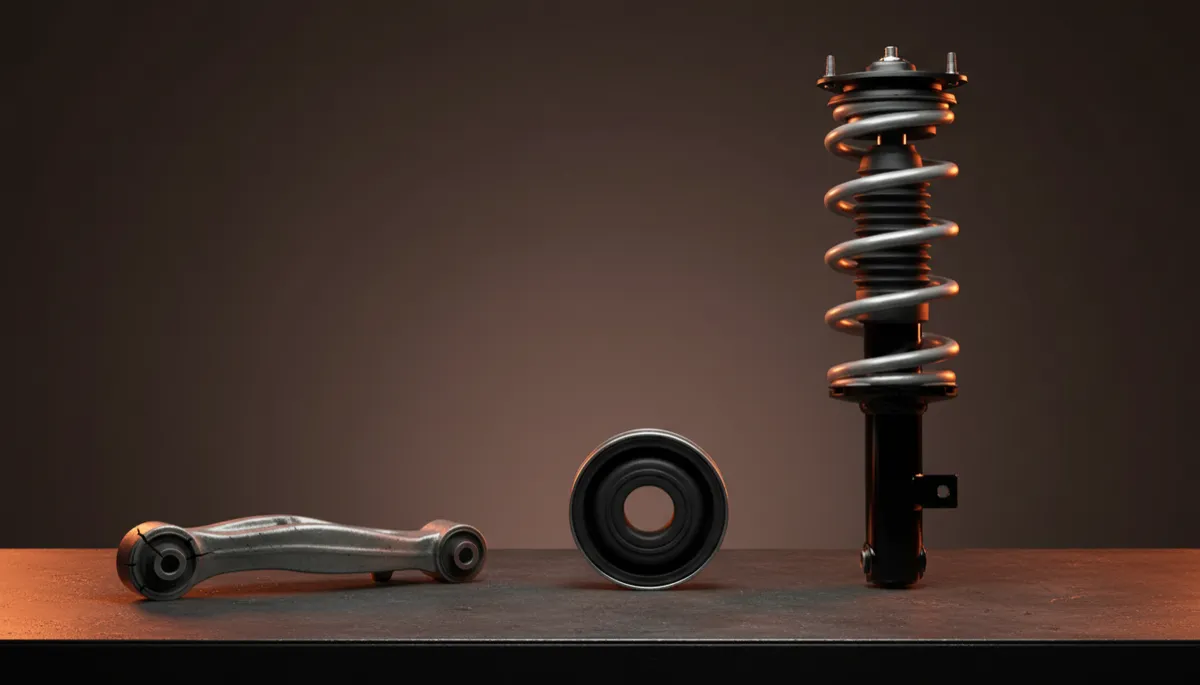
Understanding Suspension Parts Before Buying
Suspension, Suspension Parts, Vehicle Maintenance
Clunking Over Bumps? Understanding Suspension Parts Before You Buy
A dull thud over a Pretoria speed bump, a rhythmic clunk on a rough Stormvoel Road – it is enough to make any driver worry. Your first instinct might be to Google “suspension parts” and order the first thing that looks right. But that clunk can be caused by several different components. If you buy the wrong one, the noise stays and your money is gone. Your suspension is a system, not a single part. A proper workshop inspection is the only reliable way to find the cause. Once you have a confirmed diagnosis, knowing what the part is – and what details we need – helps us supply the correct component quickly and avoid ordering mistakes.
Suspension Is a System, Not a Single Part
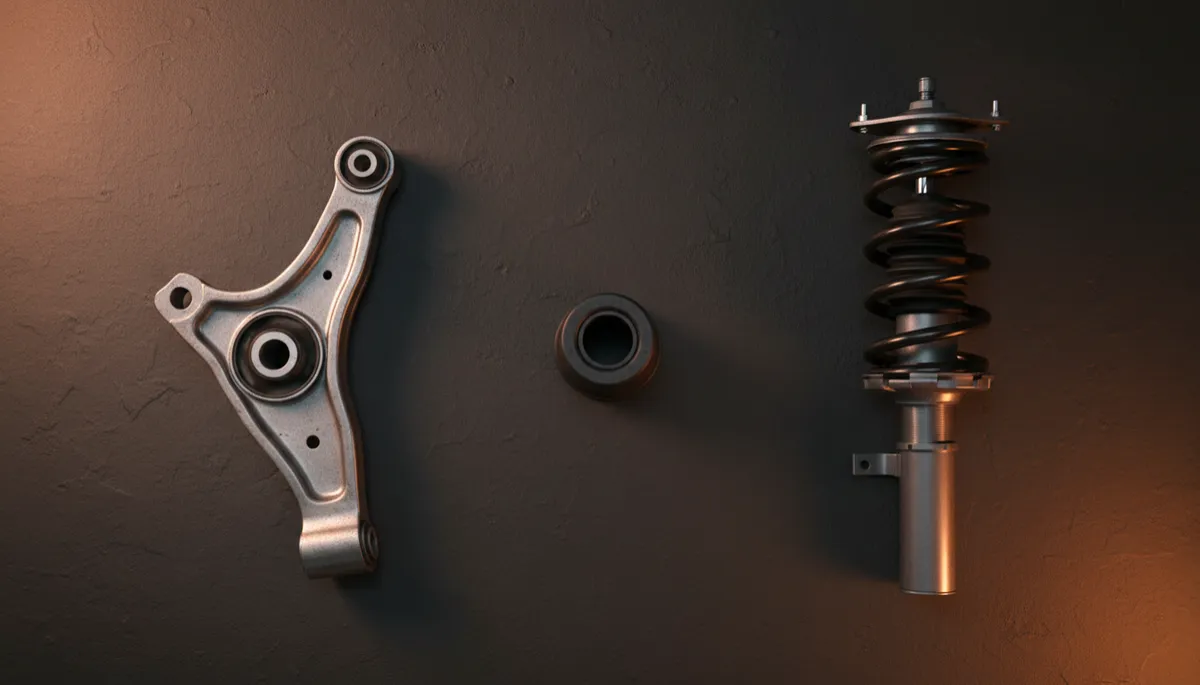
Your suspension connects the wheels to the body and helps keep the car stable, even when our Pretoria roads get rough. It is not one item you can point at. It is a collection of suspension parts that work together – shocks, springs, bushes, control arms, ball joints and more. When any one of these wears, cracks or loosens, it can produce a noise that sounds very similar to another fault. A clunk alone cannot tell you which component is at fault. A qualified workshop needs to lift the vehicle, check for play, and sometimes measure clearances before they can say, “It is this part.” Once that diagnosis is confirmed, we can help you source the correct replacement part the first time.
The Main Suspension Components — What Each One Does
Shock Absorbers (and Strut Assemblies)
Shock absorbers, or dampers, control how the car settles after a bump. Without them, the body would keep bouncing long after you hit a pothole or speed bump. A worn shock absorber can allow too much body movement and may produce knocking or clunking, especially on rough roads, and can also contribute to uneven tyre wear. Many cars use a strut assembly, where the damper, coil spring and top mount are combined into one structural unit. Replacing shocks in axle pairs (both fronts together or both rears together) is widely recommended so that damping is even from side to side. On Audi vehicles, shock absorbers fall under the Audi Genuine Parts programme – parts created during the development of the vehicle and made to match one another. Audi states that if improvements are made in series production, they are also adopted for Audi Genuine Parts, and that Audi Genuine Parts carry a two-year warranty at authorised dealers (audi.co.za/en/audi-service/audi-genuine-parts/ and the linked shock absorber page).
Coil Springs
Coil springs carry the weight of the vehicle and take the first hit from a bump before the shock absorber controls the movement. A broken or sagging spring can change ride height and may produce a clunk, especially over bigger bumps or when turning into driveways. Springs are vehicle-specific, and, like shocks, are normally replaced in axle pairs so the car sits level and behaves predictably under braking and cornering.
Suspension Bushes
Bushes are rubber or polyurethane cylinders pressed into brackets and control arms. They allow controlled movement while soaking up vibration so you do not feel every small bump in the cabin. Over time, rubber bushes can crack, harden or collapse. This wear can be one possible source of knocking, creaking or clunking, often most noticeable at low speed over rough surfaces or when pulling away or braking. On higher-mileage cars, worn bushes are a very common cause of suspension noise. They are vehicle-specific and may be sold as part of a complete control arm or as separate bush kits, depending on the design.
Control Arms (Wishbones)
A control arm, or wishbone, is the metal arm that links the wheel hub assembly to the chassis. It usually has a bush at the chassis end and a ball joint at the wheel end. Control arms can bend or fatigue over time, and the bushes or ball joints attached to them can wear. Depending on the vehicle, you can sometimes replace just the bush or ball joint, or you may need a complete arm that includes everything. Your workshop is best placed to advise which approach is correct for your BMW, Mercedes-Benz, Audi, Volkswagen, Chery, Haval or GWM.
Ball Joints
Ball joints are pivot points that connect the control arm to the steering knuckle. They let the wheel turn left and right while moving up and down. A worn ball joint can be one possible source of clunks and vague steering, and in severe cases can be dangerous. If a ball joint fails completely, it can cause a sudden loss of control. Ball joints are safety-critical components. We do not recommend used ball joints under any circumstances – new parts only, fitted and checked by a professional.
Stabiliser Bar Links (Anti-Roll Bar Drop Links)
The stabiliser bar, or anti-roll bar, helps reduce body roll in corners. Short links, called stabiliser bar links or drop links, connect the bar to the suspension on each side. Worn drop links are one of the most common sources of knocking and clunking over bumps. The noise can sound worse on speed bumps or when one wheel hits a pothole. The good news is that drop links are usually more affordable than many other suspension parts. They are vehicle-specific and must be ordered for the correct axle and side – front left, front right, rear left or rear right.
Tie Rod Ends
Tie rod ends sit in the steering system but are always checked during a front suspension inspection. They link the steering rack to the wheel hub and allow the wheels to turn smoothly. A worn tie rod end can create play in the steering and may produce a clunk, especially when changing direction. Like ball joints, tie rod ends are safety-critical. We strongly advise using new parts only, from reputable brands, and having them fitted and aligned by a workshop.
Left, Right, Front, Rear — Why Side and Position Matter
Many suspension parts are side-specific. A left front shock or control arm is not always interchangeable with the right front, even if they look similar in a picture. Mounting points, brackets or the way the strut sits in the hub can differ. In South Africa, we also drive right-hand-drive vehicles, which can cause confusion when someone says “driver’s side” or “passenger’s side.” When ordering, always think of left and right as if you are sitting in the driver’s seat looking forward. Front and rear suspension systems are often completely different in design, so a front shock will not fit the rear, even on the same car. A proper workshop report that names the exact component, position (front or rear) and side (left or right) is the minimum information we need to match the correct part for you.
What to Send for an Accurate Suspension Parts Quote
- A confirmed workshop diagnosis – which component is worn, which axle (front or rear) and which side (left or right).
- Vehicle make, model, year and engine details for your BMW, Mercedes-Benz, Audi, Volkswagen, Chery, Haval or GWM.
- Whether you need the complete assembly (for example, full strut assembly) or only an individual component (such as a bush or ball joint only).
- A part number from the removed component if it is visible – a clear photo of the number stamped on the part works well.
- Your preference for new or used parts. Remember, safety-critical items like ball joints and tie rod ends should always be new.
- Whether your vehicle has standard ride height or a modified suspension setup, as this can affect which suspension parts are correct.
A Note on Used Suspension Components
At Morris Garage, we supply both new and quality used spares. For some items, a used component can be a practical choice. Examples include non-safety-critical parts such as bare strut housings, control arm bodies without bushes and ball joints, or coil springs that are still in good, documented condition. These can help keep repair costs reasonable, especially on older vehicles. However, components that carry steering load or are already near the end of their service life – ball joints, tie rod ends and badly worn bushes – should not be sourced used. Your workshop can advise whether a used part is appropriate for your specific application and how the vehicle is used, for example, daily commuting versus heavy long-distance work.
Suspension FAQs
Q1: Can I replace just one shock absorber, or do I need to do both sides?
Many workshops recommend replacing shock absorbers in axle pairs – both fronts together or both rears together – so that damping is consistent on both sides. If you replace only one, you may end up with one new damper and one worn damper on the same axle, which can affect handling balance. Ask your workshop what is suitable for your car’s current condition and budget.
Q2: What is the difference between a strut and a shock absorber?
A shock absorber is just the damper unit. A strut, often called a MacPherson strut, combines the shock absorber with the coil spring and usually the top mount into one structural unit that also acts as the upper suspension pivot. Some vehicles use separate shocks and springs, others use struts. Before you order, confirm with your mechanic which design your vehicle uses, as they are not interchangeable parts.
Q3: How do I know if it is the bush or the ball joint causing the clunk?
From the driver’s seat, the noises can sound very similar. A workshop will usually lift the car, check for play with the wheel on the ground and in the air, and then push or pull the wheel in specific directions. This hands-on inspection helps them see which component is moving too much. It is not something that can be confirmed by sound alone, so we always recommend a professional check before you order suspension parts.
Q4: Are aftermarket suspension parts suitable for road use?
Quality aftermarket suspension parts from recognised brands are widely used by independent mechanics, workshops and panel beaters across South Africa and are suitable for most road cars. OEM and genuine parts are also available where exact-match specification is preferred. The key is to make sure the part is correct for your vehicle’s make, model, year and axle position, and that the brand has a solid reputation for quality and support.
Have a Diagnosis? Here Is What to Send Us
Need help finding the right part? Send Morris Garage your vehicle make, model, year and the part you need. Add the engine details, part number or a photo if available, and request a compatibility, availability and price check .
Chat with us on WhatsApp — we are here to help with honest service, quality spares and fair prices.
Morris Garage / Spares Boys Pretoria · 199 Stormvoel Road, Eastlyne, Pretoria, Gauteng
An enquiry does not reserve stock or confirm compatibility.